

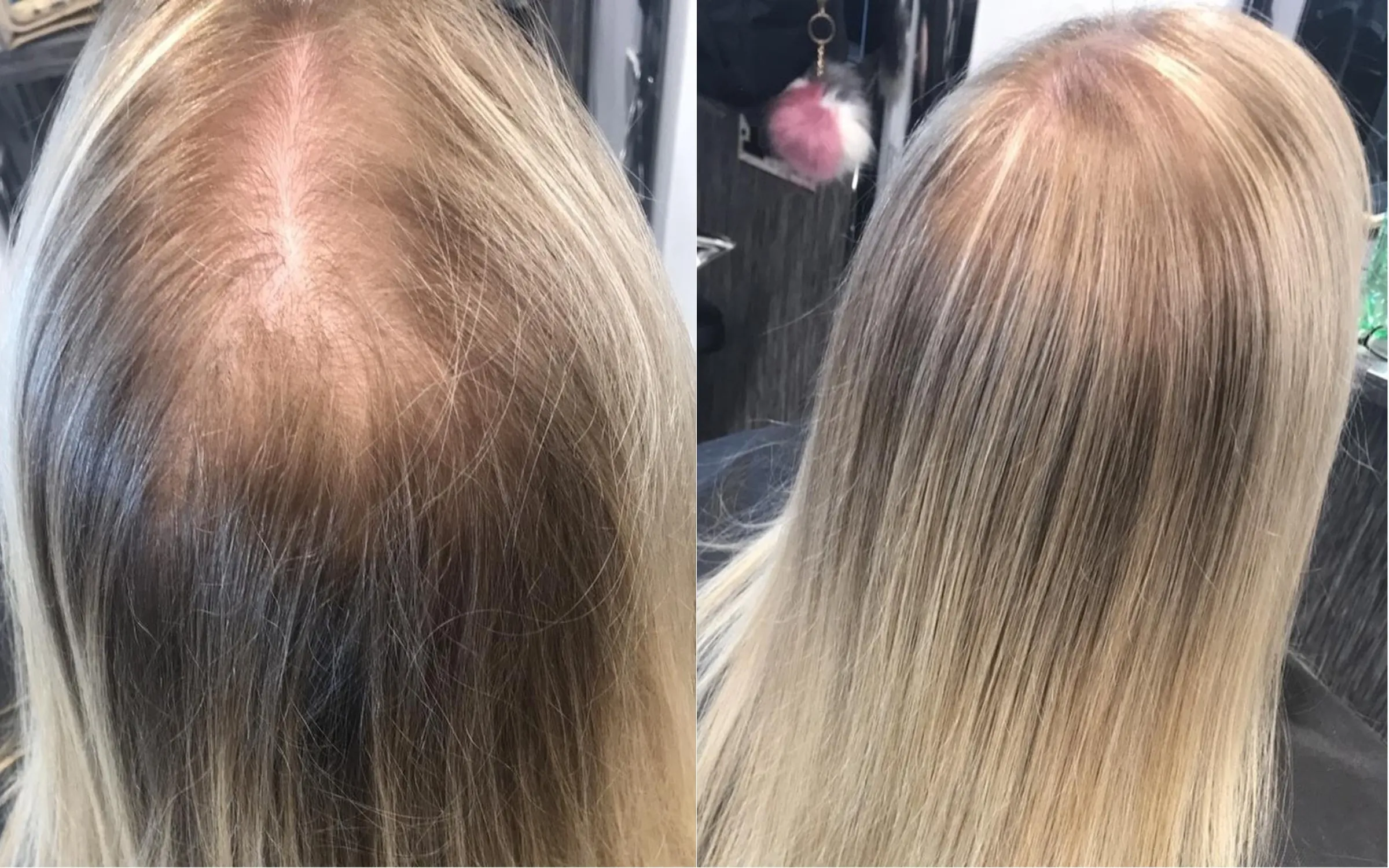
Female Hair Thinning & HRT: What Science Tells Us
Hair thinning in women is more common than many realize, and for some, the underlying cause is tied to shifting hormones. Whether during perimenopause, menopause, or other hormonal changes, declining estrogen and progesterone levels can leave hair follicles more vulnerable to the effects of androgens (male hormones). This often results in slower hair growth, reduced strand thickness, and progressive thinning along the part or crown.
The Hormone Connection
Estrogen and progesterone play a protective role for hair by extending the growth phase and keeping follicles healthy. As these hormones drop, dihydrotestosterone (DHT), a byproduct of testosterone, can have a stronger effect on the scalp, shrinking follicles over time. This pattern is known as female pattern hair loss (FPHL) and is the most common cause of thinning in women.
Can Hormone Replacement Therapy (HRT) Help?
Research suggests that HRT may help slow or reduce hair thinning in some women by restoring estrogen and progesterone balance. Estrogen therapy in particular may prolong the growth cycle of hair, supporting fuller density. However, the evidence is mixed. Some women notice significant improvements, while others see little change. The type of HRT, dosage, and delivery method (oral, patch, or cream) can all influence outcomes.
In some cases, certain progestins used in HRT may even worsen hair loss because of their androgenic activity. This is why personalization of therapy under medical supervision is critical.
Beyond HRT: Other Evidence-Based Options
Even if HRT provides some benefit, most women need a multi-pronged approach to manage hair thinning. Dermatologists and hormone specialists may recommend:
- Topical minoxidil: Clinically proven to stimulate follicles and encourage regrowth.
- Low-level laser therapy: Helps improve scalp circulation and follicle activity.
- Nutritional support: Ensuring adequate protein, iron, vitamin D, and zinc intake.
- DHT blockers: Medications or supplements that reduce the impact of androgens on hair follicles.
Some Dallas clinics also combine HRT with platelet-rich plasma (PRP) scalp treatments or peptide therapies to enhance results.
Safety Considerations
HRT is not suitable for everyone. Women with a history of breast cancer, certain cardiovascular conditions, or clotting disorders may face increased risks with hormone therapy. That’s why a personalized evaluation is essential before starting treatment. For hair-specific concerns, many women see the best outcomes by combining HRT (when appropriate) with dermatological therapies.
The Bottom Line
Science tells us that hormones undeniably play a role in female hair thinning, and HRT can be part of the solution—but it’s rarely the only answer. Women in Dallas exploring treatment options should consider a comprehensive plan that includes hormone balance, scalp-directed therapies, and lifestyle support. With the right strategy, it’s possible to slow hair thinning, improve density, and restore confidence.


