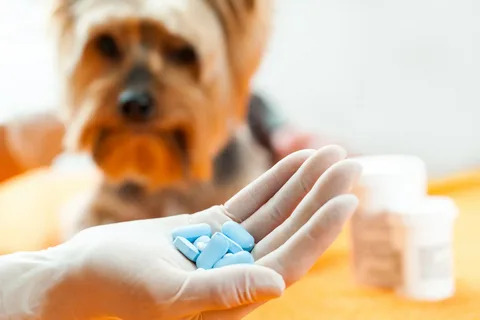
There is a particular kind of defeat that comes from finding the pill you carefully hid in a piece of cheese, licked clean and abandoned on the kitchen floor.
If your cat has perfected the art of holding a tablet in her cheek for four full minutes before spitting it behind the sofa, or your dog has learned to eat the treat and leave the capsule, you are in extremely common company. Medication refusal is one of the most frequent reasons a course of treatment doesn’t get finished and an unfinished course is a real clinical problem, not just an inconvenience.
The good news is that there is almost always a way through. Sometimes it is a change of technique. Sometimes it means changing the medication’s form entirely.
Why do pets refuse medication?
Usually it is taste, texture or the experience itself.
Many medications are genuinely bitter. Cats in particular have a strong aversion response and will foam, drool or vomit at a taste they dislike. Dogs are often easier, but a dog who has been tricked once tends to become suspicious of every piece of cheese thereafter.
There is also an association problem. If medication time has become a wrestling match, your pet starts to anticipate it, and the struggle begins before the pill does.
How do you give a cat a pill?
The technique that veterinary schools teach is more specific than most people realise, and getting the details right makes a noticeable difference.
If you can, use two people, one to gently restrain, one to give the medication. On your own, wrap your cat snugly in a towel with only the head showing, and hold her in your lap facing away from you.
Hold the pill between the thumb and first finger of your dominant hand. With the other hand, grasp the cheeks without squashing the whiskers, and tip the nose toward the ceiling. The jaw will drop slightly on its own. Gently open it further, drop the pill at the back of the throat, and push it down with your index finger.
A pill popper, a long plastic device a bit like a syringe does the same job without putting your fingers near the teeth. Worth having.
Afterwards, hold the mouth closed and stroke the throat, or blow very gently on the nose, until you see her swallow. Follow with a small amount of water so the tablet doesn’t lodge in the oesophagus. Then reward her properly: a treat, or a scratch under the chin.
One more thing worth knowing, and it is the tip that helps most: practise this before your cat is ill. A cat who has already learned that being held and having her mouth touched leads to a treat is a dramatically easier patient than one meeting the whole experience for the first time while unwell.
How do you give a dog medication?
Dogs are generally more straightforward, and food usually works but a few details matter.
Use something soft enough to swallow whole, so the pill isn’t chewed and tasted. Give two or three plain pieces first, then the loaded one, then another plain one. The rhythm matters more than the hiding place.
If your dog is on a restricted diet, or the medication must be given on an empty stomach, check with your veterinarian before using food at all. Some medications are absorbed differently with food, which affects how well they work.
What you should avoid
Don’t squirt liquid toward the back of the throat. Cats especially are prone to inhaling liquid, which can cause aspiration. Trickle it into the cheek pocket instead, and let them swallow at their own pace.
Don’t mix liquid medication into a bowl of food. If your pet doesn’t finish the bowl, they haven’t had the full dose, and you have no way of knowing how much they got. Worse, if the medication makes the food taste unpleasant, some pets stop eating that food altogether.
Don’t repeat a dose without asking. If your pet spits out a small amount, it is usually not a concern. If they spit out all of it or vomit immediately, call your veterinarian before giving another dose.
Don’t share a compounded prescription between pets. It was prepared for one animal at one weight for one condition.
When technique isn’t enough: changing the medication itself
If you have tried everything and medication time is still a battle, the answer may not be a better technique. It may be a different form of the same medicine.
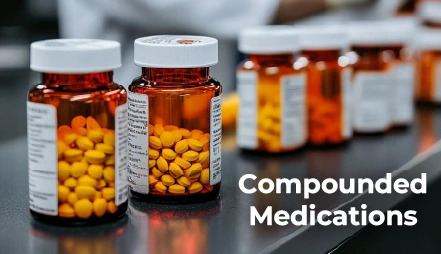
This is what veterinary compounding does. A compounding pharmacy can take the medication your veterinarian prescribed and prepare it in a form your pet will actually accept:
Flavoured liquids and suspensions. The same active medication in a liquid flavoured to suit the animal chicken, fish, beef, or something plainer for a fussy patient.
Flavoured chewables. A treat-like form that many pets take without noticing it is medication at all.
Transdermal gels. For some medications, a gel is applied to the inside of the ear flap, absorbed through the skin. No mouth involved. For cats who cannot be pilled, this is often the difference between a treatment course being completed and abandoned.
Custom strengths. Particularly useful for very small animals, or when the manufactured tablet doesn’t divide into the dose your vet wants.
Removing problem ingredients. If your pet reacts to a dye or flavouring, it can be left out.
Not every medication can be compounded into every form; some drugs simply are not absorbed through the skin, for example so this is a conversation to have with your veterinarian, who can tell you what is clinically appropriate.
What to ask before using a compounded pet medication
Compounded veterinary medications are not FDA-approved, and they should be a considered choice rather than an automatic one. The questions worth asking:
- Is there an FDA-approved product that would work for my pet, and if so, why isn’t it suitable?
- Why does my pet specifically need a compounded version?
- If my dog is taking it, does the preparation contain xylitol? Xylitol is used as a sweetener in some bases and is toxic to dogs. Always ask.
- Is the pharmacy licensed in Texas?
- What signs of an adverse reaction should I watch for?
And one practical note: if a compounded medication changes in colour, smell or consistency, stop giving it and call your veterinarian.
Getting a compounded pet medication in Dallas
Compounded veterinary medications require a prescription from your veterinarian, the same as any other. The usual route is to talk to your vet about what form would work better, and have them send the prescription to us directly or you can transfer an existing prescription.
At MedFront we prepare species-appropriate flavoured chewables, unflavoured transdermal ear gels, flavoured drops and micro-dosed preparations for companion and exotic animals, including dogs, cats and birds. Every preparation is made to your veterinarian’s specifications and checked by a pharmacist.
If you are not sure whether your pet’s medication can be compounded into something easier, call us and ask. We will tell you honestly whether it is possible, and if it isn’t, we will say so.
More detail on our veterinary compounding page.
Frequently asked questions
My cat won’t take pills. What are my options?
Try the technique veterinary schools teach towel wrap, nose toward the ceiling, pill at the back of the throat, followed by a little water. If that still doesn’t work, ask your veterinarian whether the medication can be compounded into a flavoured liquid, a chewable, or a transdermal gel applied to the ear.
Can any medication be made into a transdermal gel?
No. Only some medications are absorbed reliably through the skin. Your veterinarian can advise whether yours is one of them.
Is compounded pet medication safe?
Compounded medications are not FDA-approved and their potency and stability are not FDA-verified. They are appropriate when your veterinarian has determined a commercial product isn’t suitable. Use a licensed pharmacy, follow the instructions, and report any reaction to your vet.
Does compounded pet medication need a prescription?
Yes. A prescription from your veterinarian is required, within an existing veterinarian-client-patient relationship.
Can I hide my pet’s medication in food?
Soft food can work for tablets given to dogs, but never mix liquid medication into a full bowl if your pet doesn’t finish it, you won’t know how much they received. Check with your vet first, as some medications shouldn’t be given with food.
Is xylitol dangerous for dogs?
Yes. Xylitol is toxic to dogs and is used as a sweetener in some compounding bases. Always confirm with the pharmacy that a preparation for a dog is xylitol-free.
What flavours can compounded pet medication be made in?
Common options include chicken, beef, fish, liver and bacon, with plainer or unflavoured versions for fussy patients. The right choice depends on the species and the animal some cats refuse fish flavouring entirely, which surprises people.
How long does a compounded pet medication take to prepare?
Usually a few days, though it varies by preparation. Order a refill before you run out rather than on the last dose.
Can medication be compounded for birds, rabbits or other small animals?
Often yes. Very small animals frequently need a custom strength because manufactured tablets don’t divide small enough. Your veterinarian will confirm what’s appropriate for the species.
My dog eats the treat and spits out the pill. What else can I try?
Give two or three plain pieces first to establish a rhythm, then the loaded one, then another plain one. If that fails, ask your vet about a flavoured liquid or chewable version.
Will my vet need to write a new prescription for a compounded version?
Yes. The compounded preparation is a different medication from the commercial product, so it needs its own prescription specifying the strength, form and flavour.
Can I give my cat’s compounded medication to my other cat?
No. A compounded prescription is prepared for one animal at one weight for one condition. Never share it, even between animals of the same species.
What if the medication changes colour or smell?
Stop giving it and call your veterinarian. A change in colour, odour or consistency can indicate the preparation has degraded.