Short answer: Most medications can be compounded in some form, as long as a licensed prescriber writes for it and the ingredients are available from FDA-registered suppliers. The common categories are hormone therapy, dermatology, pediatric formulations, veterinary medications, pain management and discontinued or hard-to-find drugs. What cannot be compounded: controlled-release formulations, biologics, most vaccines, and anything on the FDA’s withdrawn-for-safety list.
If your medication doesn’t come in the strength, form or formulation you need, compounding is often the answer. Here is what’s actually possible.
What Are the Main Categories of Compounded Medication?
These are the areas where compounding is most commonly used, and what each one typically involves.
| Category | Common examples | What compounding solves |
| Hormone therapy | Estradiol, progesterone, testosterone | Doses and forms not commercially made; ingredient allergies |
| Dermatology | Tretinoin, minoxidil, finasteride combinations | Combining actives; custom strengths; removing irritants |
| Pediatric | Antibiotics, reflux medication, antifungals | Liquid forms, weight-based dosing, flavour, dye removal |
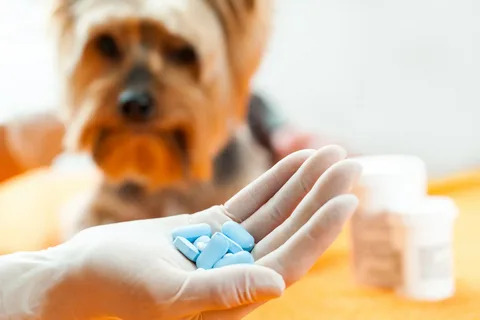
| Veterinary | Thyroid, cardiac, behavioural medications | Species-appropriate flavour and form; micro-dosing |
| Pain management | Topical analgesic combinations | Local delivery rather than systemic |
| Women’s health | Vaginal preparations, perinatal formulations | Forms not commercially available |
| Discontinued drugs | Any withdrawn commercial product | Recreating a therapy that no longer exists commercially |
| Allergen-free | Almost any oral medication | Removing dye, gluten, lactose, corn, sugar or preservatives |
What Dosage Forms Can a Compounding Pharmacy Make?
The form is often the whole point. A medication that exists only as a tablet is useless to a patient who can’t swallow tablets.
| Form | Typically used for |
| Oral suspension or solution | Children, elderly patients, anyone who can’t swallow pills |
| Capsules | Custom strengths; removing problem excipients |
| Troches / lozenges | Sublingual absorption, commonly hormones |
| Transdermal creams and gels | Hormones; medications for pets who resist oral dosing |
| Topical creams and ointments | Dermatology; localised pain management |
| Suppositories | Patients who can’t take oral medication |
| Nasal sprays | Localised or rapid delivery |
| Flavoured chewables | Veterinary, and some pediatric use |
What Medications Cannot Be Compounded?
This is the part most articles skip, and it is the part that saves you a wasted trip.
Drugs Withdrawn for Safety Reasons
The FDA maintains a list of products removed from the market because they were unsafe or ineffective. These cannot be compounded, regardless of who asks.
Most Biologics
Products like insulin analogues, monoclonal antibodies and most vaccines require manufacturing processes a pharmacy cannot replicate.
Controlled-Release Formulations
Extended-release and delayed-release tablets rely on engineered delivery systems. A compounding pharmacy can make the active ingredient but generally cannot reproduce the release mechanism.
Commercial Copies, in Normal Circumstances
A compounding pharmacy is restricted from regularly producing medications that are essentially copies of commercially available products. The exception is when the drug is on the FDA’s shortage list at that point it is not considered commercially available and the restriction lifts.
Anything Without a Valid Prescription
Every compounded medication requires one.
How Do You Find Out Whether Your Specific Medication Can Be Compounded?
Call and ask. It takes a couple of minutes and the answer is specific to your prescription.
What helps us answer quickly:
- The medication name and strength you currently take
- What isn’t working the form, the dose, an ingredient reaction
- Whether your prescriber has already suggested compounding
Sometimes the answer is no, and we will tell you plainly rather than taking an order we can’t fill well. Not every medication is suitable, and not every pharmacy has the equipment for every preparation.
What Does the Process Look Like?
- Your prescriber writes the prescription, specifying the strength, form and any flavour or exclusions.
- We review it. A pharmacist checks the formulation is appropriate and achievable.
- We quote the cost before preparing anything.
- We prepare it in our lab, to the prescription.
- Quality check, then pickup or delivery.
Timeframes vary. Some preparations are ready the same day, others take longer. We’ll give you a realistic estimate when the prescription arrives.
Where to Start
If you already have a prescription, you can transfer it to us or have your prescriber send it directly.
If you’re not sure whether what you need is possible, call and ask. We’d rather tell you honestly that something can’t be done than have you drive across Dallas to find out.
Explore the specific areas: hormone therapy · dermatology · pediatric · veterinary · specialty and discontinued
Frequently Asked Questions
What Medications Can Be Compounded?
Most can, in some form. The common categories are hormone therapy, dermatology, pediatric formulations, veterinary medications, pain management, women’s health and discontinued drugs. Allergen-free versions of most oral medications are also possible.
What Medications Cannot Be Compounded?
Drugs withdrawn from the market for safety reasons, most biologics including vaccines and insulin analogues, controlled-release formulations, and outside of shortage situations medications that would be essentially copies of commercially available products.
Can Any Medication Be Made Into a Liquid?
Many can, but not all. Some active ingredients are unstable in liquid or taste too unpleasant to mask. A pharmacist can tell you whether a specific medication is suitable.
Do I Need a Prescription for a Compounded Medication?
Yes, always, from a licensed prescriber.
Can You Remove Dyes or Allergens From My Medication?
Often yes. Dye, gluten, lactose, corn, sugar and preservatives can be excluded from many oral preparations. Tell us what you react to.
How Long Does Compounding Take?
It varies by preparation some same-day, some several days. Ask when you submit the prescription.
Can You Make a Smaller Dose Than the Manufactured Tablet?
Usually yes. Custom strengths are one of the most common reasons for compounding, especially for children, very small pets and patients sensitive to standard doses.