Short answer: Transdermal methimazole is a gel rubbed into the inside of a cat’s ear instead of given as a tablet. The published evidence suggests it works cats reach normal thyroid levels on it but it is somewhat slower than tablets in the first fortnight, and it catches up by about four weeks. Its real advantage is far fewer stomach problems. It is generally considered best suited to cats who cannot tolerate oral methimazole or who cannot be pilled at all, rather than as a first choice for every cat.
If your cat has been diagnosed with hyperthyroidism and your vet has mentioned an ear gel, this is what the research actually found including the two things that are worth knowing before you start and that most pages do not mention.
Why Would a Cat Need This Instead of a Tablet?
Methimazole is the standard medication for feline hyperthyroidism. It is normally given as a tablet, twice a day, often for the rest of the cat’s life.
That is the problem. Twice a day, indefinitely, to a cat.
Two situations lead vets to the transdermal option. The first is a cat who genuinely cannot be pilled and anyone who has tried knows this is not a matter of persistence. The second is a cat who takes the tablet but gets sick from it. Stomach upset is the most common reason methimazole gets abandoned.
A medication the cat does not receive is not treating anything, which is why the form matters clinically and not just practically.
Does It Actually Work?
Yes, and there are two published studies worth knowing about.
The Canadian Study: Does It Bring Thyroid Levels Down?
A study published in the Canadian Veterinary Journal in 2006 followed newly diagnosed hyperthyroid cats given 5 mg of methimazole gel applied to the inside of the ear every twelve hours. Ten cats completed the 28-day study.
Their average thyroid hormone level fell from 97.3 nmol/L at the start to 27.4 at day 14 and 14.6 by day 28. The normal range is 19 to 45. Every cat that completed the study reached a normal thyroid level, and all the cats that had symptoms improved.
Notably, the study reported no gastrointestinal side effects at all.
The Comparison Study: Is It as Good as Tablets?
An earlier randomised trial published in the Journal of Veterinary Internal Medicine compared transdermal against oral methimazole in 47 cats, and this is where the honest picture comes from.
At two weeks, the oral group was ahead a clearly higher proportion had reached normal thyroid levels. By four weeks, the gap had largely closed.
But the side effect difference ran the other way, and substantially. Digestive upset affected roughly one cat in twenty on the gel, against nearly one in four on tablets.
The honest summary: Transdermal methimazole trades a slower start for a much gentler one. If your cat tolerates tablets well, tablets work slightly faster. If your cat is vomiting on tablets, or cannot be pilled at all, the trade is clearly worth making because the alternative is a cat who is not being treated.
This is also roughly what the researchers concluded. The Canadian study’s authors recommended transdermal methimazole for cats with digestive intolerance to the oral drug, or for cats who cannot take oral medication, rather than as a replacement for tablets in every case.
Why Does the Ear Work at All?
Two reasons.
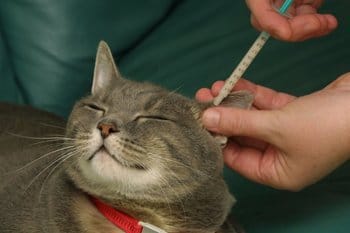
The inside of the ear flap has thin skin, little fur and a good blood supply, so medication applied there is absorbed reasonably well. It is also somewhere a cat cannot easily lick.
The second reason is more interesting. A tablet is swallowed and passes through the liver before reaching the bloodstream, which is where much of the stomach irritation comes from. Medication absorbed through the skin skips that first pass through the liver. Researchers have suggested this is why a transdermal dose can achieve a similar effect with fewer side effects.
How Do You Apply It?
This is where most pages say “apply to the ear” and stop. The technique matters, both for the dose your cat receives and for your own safety.
- Put on a glove, or use a finger cot. Methimazole absorbs through your skin too, and this is not optional.
- Measure the dose exactly as prescribed, usually from a syringe marked for it.
- Apply it to the inside of the ear flap the hairless inner surface, not down the ear canal.
- Rub it in gently for several seconds until it is no longer visible.
- Alternate ears with each dose. The same spot twice a day builds up residue and can irritate the skin.
- Wipe the inner ear clean before applying, if residue has built up from previous doses.
- Dispose of the glove and wash your hands.
Two things to watch for over the first few weeks: redness or soreness on the inside of the ear, and any visible residue not being absorbed. Both are worth mentioning to your vet.
What Are the Side Effects?
Far fewer stomach problems than tablets, which is the main point. But not none, and two deserve particular attention.
| Side effect | What the studies found |
| Digestive upset | Much less common than with tablets roughly one cat in twenty versus nearly one in four |
| Redness or soreness of the inner ear | Reported. One cat in the Canadian study developed marked redness and was withdrawn |
| Low platelet count | Rare. One cat in the Canadian study, which resolved within ten days of stopping |
| Facial irritation or scratching | Reported with oral methimazole in roughly 2% of cats |
| Changes in blood counts | Reported with oral methimazole; your vet will monitor with blood tests |
The One Nobody Mentions: Kidney Disease
In the Canadian study, one cat’s kidney values rose during treatment. The authors concluded this was most likely pre-existing kidney disease that had been hidden by the hyperthyroidism.
This is worth understanding rather than worrying about. An overactive thyroid increases blood flow through the kidneys, which can make kidney function look better than it is. Treating the thyroid removes that effect, and underlying kidney disease becomes visible.
The medication did not cause the kidney disease. It revealed it. This is a known phenomenon in treating feline hyperthyroidism, it is one of the main reasons your vet runs blood tests before and during treatment, and it is a conversation worth having with them rather than a reason to avoid treatment.
One Practical Thing About the Gel Itself
In the Canadian study, about a third of owners reported that the gel had an uneven texture, and the authors noted this may have caused variable dosing.
That is a quality issue, not a drug issue, and it is worth knowing when choosing where to have the prescription made. A transdermal gel has to be mixed so the medication is evenly distributed through it. If it is not, some doses carry more drug than others, and the cat’s thyroid levels become harder to control.
The same study noted stability as a limitation. A compounded gel has a beyond-use date for a reason, and it should be stored as the pharmacy directs and replaced when told to.
If you notice separation, grittiness or a change in colour or consistency, call the pharmacy rather than carrying on with it.
How Long Before It Works?
Expect a few weeks rather than a few days. In the published studies, thyroid levels fell substantially by two weeks and reached the normal range by four.
Your vet will recheck blood work to confirm and to adjust the dose. Do not change the dose yourself based on how the cat looks thyroid levels are not something you can read from behaviour.
Why Does It Have to Be Compounded?
There is no commercially manufactured transdermal methimazole. Tablets exist; an ear gel does not. If your vet prescribes it, a compounding pharmacy has to prepare it.
It is usually made in a base designed to carry medication through skin, and the strength is matched to the dose your vet specifies — which matters for cats, where doses are small and body weights vary enormously.
Compounded animal medications are not FDA-approved. Under FDA guidance, your veterinarian determines whether a compounded preparation is clinically appropriate and documents the reason and for a cat who cannot take tablets, that reason is straightforward.
How MedFront Prepares It
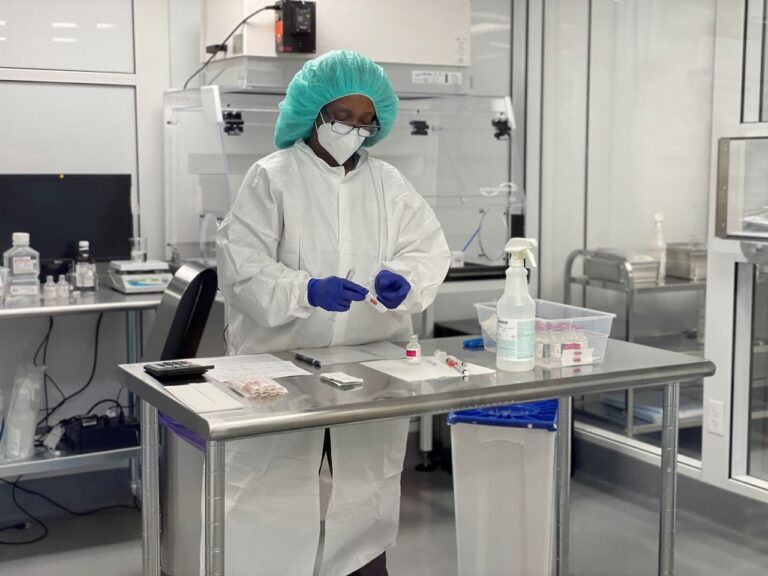
We compound transdermal methimazole for cats to a veterinarian’s prescription, in the strength specified, mixed so the medication is evenly distributed through the base.
If your vet has prescribed it and you are deciding where to have it made, call us. If your vet wants to discuss the base, the strength or stability before writing, they can reach a pharmacist directly.
Before you start: Transdermal methimazole requires a prescription from your veterinarian, who decides whether it is appropriate for your cat. Compounded animal medications are not FDA-approved. Do not change the dose or stop treatment without speaking to your vet, and keep to the blood test schedule they set.
Frequently Asked Questions
Is Transdermal Methimazole as Effective as Tablets?
Close, but slower to start. In a randomised trial of 47 cats the oral group was further ahead at two weeks, and the gap had largely closed by four weeks. Both routes brought cats to normal thyroid levels.
Why Would My Vet Choose the Gel Over Tablets?
Usually because the cat cannot be pilled, or because tablets are causing stomach upset. Digestive side effects were markedly less common with the gel roughly one cat in twenty versus nearly one in four.
Where Exactly Do I Apply It?
To the hairless inner surface of the ear flap, not into the ear canal. Rub it in gently until it is no longer visible, and alternate ears with each dose.
Do I Need Gloves?
Yes. Methimazole absorbs through human skin as well. Use a glove or finger cot every time and wash your hands afterwards.
How Long Until My Cat’s Thyroid Levels Come Down?
In published studies levels fell substantially by two weeks and were within the normal range by four. Your vet will confirm with blood tests.
What Side Effects Should I Watch For?
Redness or soreness of the inner ear, and any residue that is not absorbing. Digestive upset is possible but much less likely than with tablets. Your vet will monitor blood counts and kidney values.
Can Treating Hyperthyroidism Damage My Cat’s Kidneys?
It does not damage them, but it can reveal existing kidney disease that the overactive thyroid was masking. This is well recognised and is one reason your vet checks blood work before and during treatment.
Why Does the Gel Sometimes Look Uneven?
A transdermal gel has to be mixed so the medication is evenly distributed. If it looks separated, gritty or has changed colour, call the pharmacy rather than continuing to use it.
Does My Cat Need This for Life?
Methimazole manages hyperthyroidism rather than curing it, so treatment is usually long term. Radioiodine therapy and surgery are curative options worth discussing with your vet.
Can I Switch My Cat from Tablets to the Gel Myself?
No. The dose is not necessarily the same, and the change needs your vet’s direction and follow-up blood tests.
Do I Need a Prescription?
Yes. Transdermal methimazole is prepared on a prescription from a licensed veterinarian.
Is Compounded Methimazole Gel FDA-Approved?
No. Compounded animal medications are not FDA-approved. Your veterinarian determines that a compounded preparation is clinically appropriate and documents the reason.
What If I Miss a Dose?
Give it when you remember unless the next dose is nearly due, and do not double up. If you miss several, call your vet.
How Should I Store It?
As the pharmacy directs, and replace it by the date on the label. Compounded gels have a beyond-use date for a reason.